Massachusetts drivers can pay surprisingly different premiums for the same car, and that is exactly why smart shopping matters. If you want protection that fits your budget without leaving dangerous gaps, knowing the real price ranges is your advantage.
In general, minimum coverage in Massachusetts often runs about $450-$900 yearly or $38-$75 monthly, while full coverage commonly lands near $1,400-$2,700 yearly or $117-$225 monthly. Your age, ZIP code, car, record, and mileage can move that number fast, so treat every quote like a negotiation opportunity.





| Driver type | Minimum | Full | Pricing notes |
|---|---|---|---|
| Safe adult | $38-$60/mo | $117-$175/mo | Often below U.S. average |
| Teen | $90-$180/mo | $260-$450/mo | Highest risk tier |
| Senior | $40-$70/mo | $120-$190/mo | Can rise after claims |
| Driver with violation | $65-$120/mo | $180-$320/mo | Surcharges vary sharply |
- Low example: older paid-off sedan, clean record, suburban ZIP, minimum coverage.
- Mid-range example: commuter SUV, full coverage, average deductible, clean history.
- High example: financed luxury car, Boston-area ZIP, prior ticket or claim.
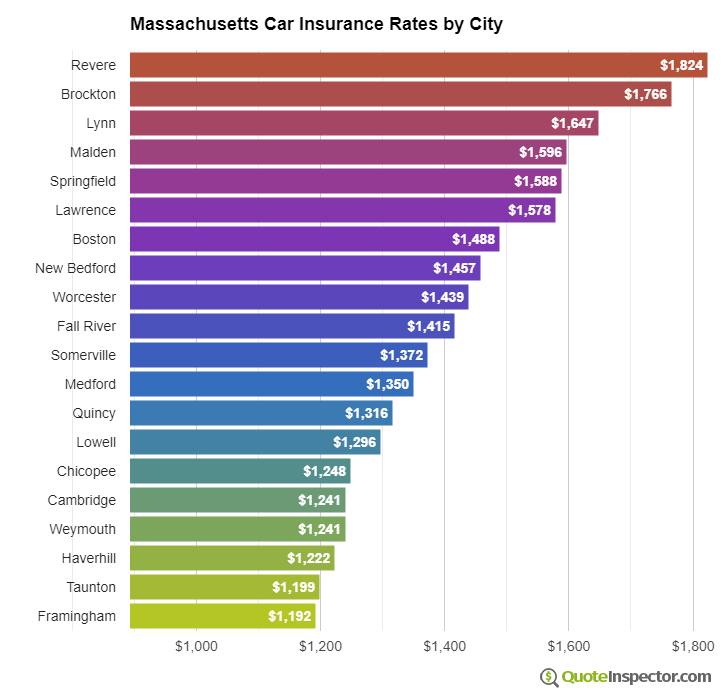
Massachusetts prices differ from national averages because of dense traffic, repair costs, medical claim patterns, strict underwriting, and local territorial pricing. Urban areas like Boston, Cambridge, and Worcester usually cost more than many suburban towns because congestion, theft exposure, and claim frequency are higher.
| Factor | Impact on price | Risk level | Practical note |
|---|---|---|---|
| Age | Very high | Teens highest | Rates usually ease with experience |
| Driving history | Very high | Accidents raise risk | Clean record earns best quotes |
| ZIP code | High | Urban higher | Garaging location matters |
| Vehicle and mileage | High | Expensive cars higher | Long commutes cost more |
A clean record can keep full coverage near the lower end, while one at-fault accident, claim, or speeding violation may push pricing up 20% to 70% or more. Credit-based factors are limited compared with some states, but insurers still use legal underwriting variables such as prior insurance history and lapse risk.
| Coverage type | Required or optional | What it covers | Who may need it |
|---|---|---|---|
| Bodily injury liability | Required | Injuries you cause | All drivers |
| PIP | Required | Medical and lost wages | All drivers |
| Property damage liability | Required | Damage you cause | All drivers |
| UM and add-ons | Required plus optional extras | Uninsured loss, collision, comp, rental, roadside | Drivers wanting stronger protection |
- Minimum coverage is cheaper upfront but can leave major repair bills after a crash.
- Financed or leased cars often require collision and comprehensive.
- Higher deductibles reduce premium but increase out-of-pocket risk.
| Insurer category | Driver profile | Estimated cost range | Discount potential |
|---|---|---|---|
| Budget-focused carrier | Safe driver | $450-$1,600/yr | Bundling, telematics |
| Family-focused carrier | Teen or family | $1,800-$5,000/yr | Student, multi-car |
| Preferred carrier | Senior or homeowner | $900-$2,100/yr | Home-auto package |
| Nonstandard carrier | Prior incidents | $1,400-$3,800/yr | Limited discounts |
| Method | Potential savings effect | Tradeoff | Best use case |
|---|---|---|---|
| Bundle policies | Medium to high | Less carrier flexibility | Homeowners or renters |
| Raise deductible | Medium | More out of pocket | Emergency fund available |
| Choose cheaper-to-repair car | Medium | Fewer premium features | Next vehicle purchase |
| Review add-ons yearly | Low to medium | Less convenience coverage | Renewal season |
| Scenario | Coverage level | Estimated monthly cost | Estimated annual cost |
|---|---|---|---|
| First-time driver | Minimum | $95-$160 | $1,140-$1,920 |
| Family driver | Full | $145-$230 | $1,740-$2,760 |
| Daily commuter | Full | $130-$210 | $1,560-$2,520 |
| Past violation | Full | $180-$300 | $2,160-$3,600 |
The smartest cost plan is simple: compare equal limits across carriers, pick a deductible you can truly afford, remove overlapping extras, and never judge a policy by price alone.
Average auto insurance cost in Massachusetts
Massachusetts car insurance is rarely bargain-bin cheap, but it is often more predictable than drivers expect. If you want a fast benchmark, most drivers will see noticeably lower prices for minimum coverage and a steeper jump for full coverage.
Current averages in Massachusetts typically land around $500 to $900 per year for minimum coverage, or roughly $40 to $75 per month. Full coverage usually runs about $1,500 to $2,400 per year, which works out to roughly $125 to $200 per month. Your actual quote can land outside these bands, but these ranges are a practical starting point for budgeting.
What the Typical Price Tag Really Looks Like
Pricing changes quickly depending on who is behind the wheel and how much protection is included. In Massachusetts, driving record, age, location, vehicle value, and insurer pricing models all shape the bill, which is why two drivers in the same city can still get very different quotes.
| Driver type | Minimum coverage | Full coverage | Pricing notes |
|---|---|---|---|
| Good driver, age 30-50 | $500-$800/yr | $1,500-$2,100/yr | Often the closest to statewide averages |
| Young driver, age 18-24 | $1,000-$1,800/yr | $3,000-$5,500/yr | Limited experience pushes rates up fast |
| Driver with one speeding ticket | $700-$1,200/yr | $1,900-$2,900/yr | Even one violation can raise premiums |
| Driver with poor credit or other rating risks | $800-$1,400/yr | $2,100-$3,400/yr | Quotes vary widely by insurer and profile details |
Massachusetts premiums often differ from national averages for a few big reasons. The state has dense traffic corridors, expensive repairs, higher medical and claim costs, and strong insurance requirements that can keep premiums elevated. At the same time, a regulated market and competitive insurer landscape can help some drivers avoid the extreme pricing seen in higher-risk states.
Pro Tip: A Massachusetts quote that looks expensive at first glance may still be competitive if it includes higher liability limits, comprehensive, collision, and better deductibles than a bare-bones policy from another state.
To make those ranges easier to picture, here are common premium examples shoppers often encounter:
- Low premium: About $450 to $700 per year for minimum coverage on an older car with a clean-record, experienced driver.
- Mid-range premium: About $1,600 to $2,200 per year for full coverage on a standard sedan driven by someone with a solid history.
- High premium: About $3,000 to $5,000+ per year for full coverage if the driver is young, recently ticketed, or insuring a newer financed vehicle.
Those examples show why Massachusetts shoppers should treat averages as a guide, not a guarantee. A modest policy for a low-risk driver can stay manageable, while a higher-risk profile can turn the same market into a much more expensive one.
Factors that affect insurance rates in Massachusetts
Massachusetts car insurance prices are shaped by more than the state average. Your quote can swing noticeably based on who you are, where you live, what you drive, and how much risk an insurer sees in your profile.
Insurers use rating variables to predict the chance and cost of future claims. In practice, that means a careful driver in a quieter suburb may pay far less than someone with recent tickets who parks a high-value SUV in a dense Boston ZIP code. Even small details, such as annual mileage or prior coverage history, can nudge premiums up or down.
What insurers quietly measure behind your quote
The biggest pricing drivers usually work together, not in isolation. A younger driver with a clean record may still pay more than an older driver because of limited experience, while a seasoned driver can still see rates jump after an at-fault accident or repeated violations. In Massachusetts, location matters too: urban areas often cost more than suburban ones because of traffic density, theft exposure, vandalism risk, and a higher frequency of claims.
| Factor | Impact on price | Common risk level | Practical note |
|---|---|---|---|
| Age and driving experience | Younger and newly licensed drivers usually pay more | Higher for teens and early-20s drivers | Rates often improve with age and steady experience |
| Driving history | Tickets, accidents, and claims can raise premiums fast | Low with clean record; high with recent incidents | Severity and recency usually matter most |
| ZIP code | Dense city locations often cost more than suburban areas | Higher in heavy-traffic or high-theft zones | Garaging location can materially change a quote |
| Vehicle type | Luxury, performance, or costly-to-repair vehicles raise prices | Higher for expensive or theft-prone models | Safety features may help offset some cost |
| Annual mileage | More miles can mean more exposure and higher rates | Lower for limited-use drivers | Commuters often pay more than occasional drivers |
| Underwriting factors | Prior insurance gaps, claim patterns, and other approved data can affect price | Varies by insurer and profile | Availability and use of credit-related factors depend on insurer rules and state limits |
Here is how record-based pricing often changes in the real world:
- Clean record: Usually qualifies for better base rates and more discount opportunities.
- One speeding ticket: May trigger a moderate increase, especially for younger drivers.
- At-fault accident: Often causes a sharper jump because it signals higher future claim risk.
- Multiple claims or violations: Can move a driver into a pricier tier or limit preferred options.
Location inside Massachusetts can be especially influential. Drivers in Boston, Worcester, Springfield, or other busier urban corridors may face higher premiums because insurers expect more stop-and-go traffic, more frequent collisions, and greater exposure to theft or vandalism. By contrast, many suburban communities benefit from lighter congestion and fewer claim triggers, which can help keep premiums more manageable, though local accident trends still matter.
Pro Tip: If two quotes look strangely different, check the garaging ZIP code, annual mileage estimate, and violation history first. Those three details commonly create surprisingly large price gaps.
Vehicle choice also carries hidden pricing weight. A practical sedan with strong safety ratings may cost less to insure than a pickup with expensive repair parts or a sporty model associated with faster driving. Likewise, if your insurer considers credit-related or broader underwriting signals where permitted, a stronger overall risk profile may support a lower premium, while coverage lapses or inconsistent insurance history can work against you.
Minimum coverage requirements and optional protections
Massachusetts lets you start driving legally with a lean policy, but “legal” and “well protected” are not the same thing. The cheapest setup can save money today while leaving expensive gaps tomorrow.
State law requires several core coverages, each designed for a specific kind of loss. Bodily Injury to Others helps pay for injuries you cause to other people in a crash. Personal Injury Protection (PIP) helps cover medical bills, lost wages, and certain replacement services for you and your passengers, no matter who caused the accident, up to the policy limit. Bodily Injury Caused by an Uninsured Auto helps if an uninsured driver injures you or household members. Property Damage pays for damage you cause to someone else’s car, fence, building, or other property.
Where basic coverage stops and smart add-ons begin
Minimum coverage mainly protects other people and limited medical costs; it does not fully protect your own car. That is where optional protections become valuable. Collision helps pay to repair or replace your vehicle after a crash, regardless of fault. Comprehensive covers non-collision losses such as theft, vandalism, hail, fire, or hitting an animal. Some drivers also choose higher or broader uninsured/underinsured motorist protection for stronger protection if another driver has too little insurance. Roadside assistance can help with towing, jump-starts, lockouts, or flat tires, while rental reimbursement helps pay for a temporary car when your covered vehicle is in the shop after a claim.
| Coverage type | Required or optional | What it covers | Who may need it |
|---|---|---|---|
| Bodily Injury to Others | Required | Injuries you cause to other people in an accident | Every Massachusetts driver |
| PIP | Required | Medical bills, lost wages, and certain services for you/passengers | Drivers who want no-fault medical support |
| Uninsured Motorist | Required | Injuries caused by an uninsured driver | Anyone worried about uninsured drivers |
| Property Damage | Required | Damage you cause to another person’s property | Every Massachusetts driver |
| Collision | Optional | Damage to your own car after a crash | Financed, leased, newer, or high-value vehicles |
| Comprehensive | Optional | Theft, vandalism, weather, fire, falling objects, animal strikes | Drivers parking outside or protecting newer cars |
| Enhanced UM/UIM | Optional | Extra protection when the at-fault driver lacks enough coverage | Drivers wanting broader injury protection |
| Roadside and Rental | Optional | Towing, lockout help, and temporary transportation | Commuters and households with one vehicle |
Before choosing the bare minimum, consider where the financial pressure really lands after a claim.
- Minimum coverage is often cheaper upfront because it skips protection for damage to your own vehicle.
- If you cause a crash, repair costs for your car may come entirely out of pocket without collision.
- Theft, storm damage, or vandalism can become a full personal expense without comprehensive.
- State minimum liability limits may be exhausted quickly in a serious accident, leaving you exposed.
- Without rental reimbursement, even a short repair period can create transportation costs and disruption.
Pro Tip: If your car would be hard to replace from savings, optional coverage may protect your budget better than the lowest premium ever could.
Rate comparisons by company and driver category
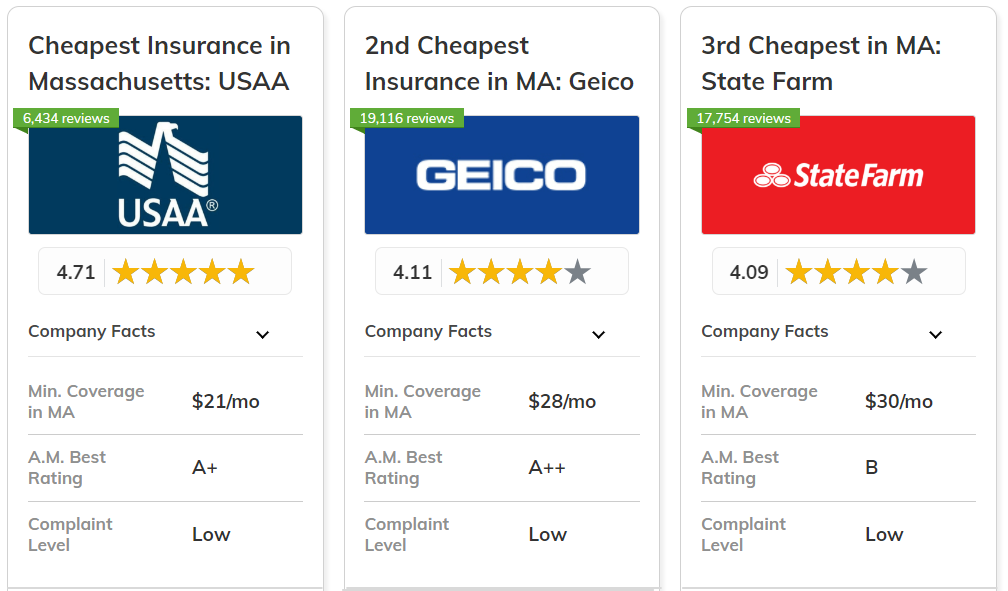
Massachusetts car insurance pricing can swing fast from one insurer to the next, even when the car and coverage look nearly identical. The real surprise is this: the “best deal” often changes with the driver sitting behind the wheel.
One carrier may reward a spotless driving history with aggressive pricing, while another may be more forgiving toward a prior at-fault crash or a late move into the state. That is why smart shopping is less about finding one universally cheap brand and more about matching your profile to the insurer that values it most.
Who each insurer tends to reward
Below is a simple comparison framework showing how prices may vary by company type and driver category. These are illustrative estimated annual ranges, not guaranteed quotes, but they show how dramatically premiums can shift based on underwriting appetite, discounts, and claims history.
| Insurer category | Driver profile | Estimated cost range | Discount potential |
|---|---|---|---|
| Budget-focused national carrier | Safe driver with clean record | $1,100-$1,700 | High for bundling, telematics, paperless |
| Family-oriented regional insurer | Teen driver on family policy | $2,800-$5,200 | Moderate to high for student and driver-training discounts |
| Traditional full-service insurer | Senior driver with low annual mileage | $1,000-$1,800 | High for low-mileage and multi-policy households |
| Carrier active in relocation markets | New Massachusetts resident | $1,300-$2,300 | Moderate for prior continuous coverage and online quoting |
| Nonstandard or flexible-underwriting insurer | Driver with ticket, lapse, or prior accident | $2,000-$4,500 | Limited to moderate; stronger after time without new incidents |
The cheapest company for a safe 40-year-old driver may be nowhere near the cheapest for a teen, a retiree, or someone with a recent claim. Insurers use different rating formulas for mileage, territory, credit-related factors where allowed, vehicle type, prior coverage, and violation severity. In practice, one company may see a teen as a major risk, while another gives more weight to a good-student discount or a parent’s long customer history.
That profile mismatch is where comparison shopping pays off. A new resident may get a better offer from an insurer that likes continuous prior coverage, while a driver with an old speeding ticket may find relief with a company that places less emphasis on minor incidents after a few clean years.
To compare carriers fairly, use the same inputs every time so you are judging insurers, not changing quote assumptions.
- Keep liability limits, deductibles, and optional coverages identical across every quote.
- Use the same vehicle, garaging ZIP code, annual mileage, and driver list on each application.
- Request quotes for the same effective date, since timing can affect pricing.
- Ask each carrier to apply all available discounts, including bundling, autopay, homeowner, and telematics.
- Compare both the premium and the value of features like claims service, rental reimbursement, and roadside assistance.
- Re-shop after life changes such as moving, adding a teen, paying off a car, or going violation-free.
Pro tip: Get at least three to five quotes on the same day. When the inputs match, the price gaps become much more meaningful—and much easier to act on.
Consistency creates clarity. If one insurer is far lower for your exact profile, that usually signals a better underwriting fit, not just a lucky number on a screen.
Ways to lower auto insurance costs in Massachusetts
Massachusetts drivers often have more control over their premium than they think. A few smart adjustments can trim costs without stripping away the protection that matters when life gets expensive fast.
The goal is not simply to buy the cheapest policy, but to pay less for coverage that still fits your car, budget, and driving habits. That usually means combining discounts, removing waste, and checking your policy before renewal instead of accepting the new price on autopilot.
Smart premium-cutting moves that protect your wallet
Start with the savings levers insurers reward most. Bundling auto with renters, condo, or home insurance can unlock a meaningful discount. Raising your deductible usually lowers the monthly premium, but only works well if you can comfortably cover that larger out-of-pocket cost after a claim. Keeping a clean driving record, avoiding lapses in coverage, and asking about defensive driving or telematics programs can also help. Vehicle choice matters too: cars with lower repair costs, strong safety features, and lower theft rates are often cheaper to insure than luxury or performance models.
| Method | Potential savings effect | Tradeoff | Best use case |
|---|---|---|---|
| Bundle policies | Often moderate to strong discount | May reduce flexibility to split carriers | Drivers who also carry renters or homeowners coverage |
| Raise deductible | Can noticeably lower premium | Higher out-of-pocket cost after a claim | Households with an emergency fund |
| Maintain a clean record | Long-term premium stability | Requires consistent safe driving | Commuters and multi-car families |
| Choose a lower-cost vehicle to insure | Can reduce both collision and comprehensive costs | Fewer premium-brand or high-performance options | Drivers shopping for a replacement car soon |
One of the fastest ways to stop overpaying is to audit your policy line by line. Look for add-ons that duplicate protection you already have elsewhere. For example, roadside assistance may overlap with a car club membership or manufacturer plan, rental reimbursement may be unnecessary if your household has a spare vehicle, and some optional protections may not make sense for an older car with limited market value. If the annual cost of optional coverage is high compared with what you could realistically claim, it deserves a second look.
Pro Tip: Before removing any coverage, ask the insurer to explain exactly what risk you would be taking back. A cheaper premium feels great until one uncovered loss wipes out the savings.
Use this quick process when shopping and renewing so you do not pay more than necessary:
- Gather the same driver, vehicle, mileage, and coverage details before requesting quotes.
- Compare at least three insurers using matching limits and deductibles, not just the total price.
- Ask each carrier to apply every available discount, including bundle, autopay, paperless, safe-driver, and low-mileage options.
- Review optional coverages one by one and remove only those that are unnecessary or overlapping.
- Re-shop before every renewal, especially after moving, paying off a vehicle, or changing annual mileage.
- Check the renewal declaration for quiet price increases, changed deductibles, or added endorsements you did not request.
- Keep proof of prior insurance handy because continuous coverage can support better pricing.
- If you raise your deductible, move the difference into savings so the strategy stays practical.
- When buying a car, get insurance quotes before signing; the wrong model can lock in higher costs for years.
Sample pricing scenarios and cost planning
Massachusetts car insurance prices can feel abstract until you see how they play out for real-life drivers. A few smart assumptions make it much easier to picture what your own monthly bill could look like before you start requesting quotes.
The examples below use realistic Massachusetts-style estimates, not guaranteed premiums, and assume clean payment history unless noted. Your final price can still shift based on ZIP code, car value, annual mileage, and selected deductibles, but these scenarios give you a practical planning range.
Budget mapping for real-world driver profiles
Think of these numbers as planning anchors rather than exact offers. They help you compare what happens when coverage gets broader, risk increases, or a financed vehicle requires stronger physical damage protection such as collision and comprehensive.
| Scenario | Coverage level | Estimated monthly cost | Estimated annual cost |
|---|---|---|---|
| First-time driver, age 18-20, used sedan | State minimum plus basic extras | $210-$320 | $2,520-$3,840 |
| Family driver, married parent, two vehicles | Mid-level full coverage | $170-$260 | $2,040-$3,120 |
| Daily commuter, 12,000-15,000 miles/year | Full coverage with higher liability limits | $160-$245 | $1,920-$2,940 |
| Driver with one recent speeding ticket or at-fault claim | Similar full coverage, higher-risk pricing | $230-$360 | $2,760-$4,320 |
When reviewing quotes, watch how deductible choices affect both affordability today and risk tomorrow. Raising a collision or comprehensive deductible from $500 to $1,000 often lowers the premium, but it also means paying more out of pocket after a covered loss. Lower deductibles usually bring more peace of mind, yet they push the monthly premium upward.
Vehicle financing can change the math even more. If your car is leased or financed, the lender will often require collision and comprehensive coverage, and may expect deductibles to stay below a set threshold. That requirement can move a driver from a leaner liability-focused policy into a more expensive package, especially with newer vehicles that cost more to repair or replace.
Use these checkpoints to pressure-test a quote before you buy:
- Match the premium to your monthly budget, but also check the annual total.
- Ask whether the quote reflects financed-car requirements or optional add-ons.
- Compare at least two deductible setups so you see the real tradeoff.
- Review whether the coverage fits your driving habits, parking situation, and vehicle value.
Pro tip: The cheapest policy is not always the lowest-cost choice over time. Focus on the balance between premium, deductible, and required coverages so you are not surprised by a high out-of-pocket bill after an accident, theft, or weather-related claim.
For many shoppers, the best planning move is to build a simple quote grid with one column for premium, one for deductible, and one for required coverages. That side-by-side view makes hidden cost differences obvious, especially when one policy looks cheaper only because it strips protections or raises your financial risk after a claim.
Closure
If you want the best value in Massachusetts, do not chase the lowest premium blindly. Compare matching quotes, balance deductible risk with real-life savings, and build coverage around how you drive today. That approach turns insurance from a monthly expense into a financial shield that works when you need it most.
Frequently Asked Questions
Is Massachusetts auto insurance expensive?
It can be moderate overall, but urban drivers and high-risk profiles often pay much more.
What is the cheapest coverage option?
State minimum coverage is usually the cheapest, though it offers the least protection.
Why are Boston-area rates higher?
Dense traffic, theft risk, claim frequency, and repair costs often increase premiums.
Does one ticket change rates a lot?
Yes, even one violation can trigger noticeable increases depending on the insurer.
Do I need full coverage on a paid-off car?
Not always, but it may still be wise if the car value and your risk tolerance justify it.
How can I compare quotes correctly?
Use the same limits, deductibles, vehicle details, and driver information for every quote.