In Washington State, one overlooked detail, one disputed recommendation, or one missed deadline can turn a routine project into an expensive professional headache. Errors and omissions insurance helps protect service-based businesses when clients claim negligence, inaccurate advice, misrepresentation, or failure to deliver contracted work as promised. It is often used by consultants, real estate professionals, insurance agents, technology providers, and licensed firms that sell expertise rather than physical products.
Think of this coverage as a strategic shield for your reputation and balance sheet. While general liability typically addresses bodily injury or property damage, errors and omissions insurance focuses on financial harm tied to professional services; many insurers also use the term professional liability. In Washington, it is not usually required across all industries by one broad state law, but it is frequently expected through licensing rules, client contracts, vendor agreements, bids, and professional standards. That makes smart policy selection less about buying any policy and more about matching wording, limits, retroactive protection, and endorsements to the real work your business performs.






Understanding Errors and Omissions Insurance in Washington State
In Washington State, one overlooked detail, delayed deliverable, or flawed recommendation can turn a routine client project into a costly dispute. Errors and omissions insurance helps professionals protect their revenue, reputation, and momentum when a client claims their work caused financial harm.
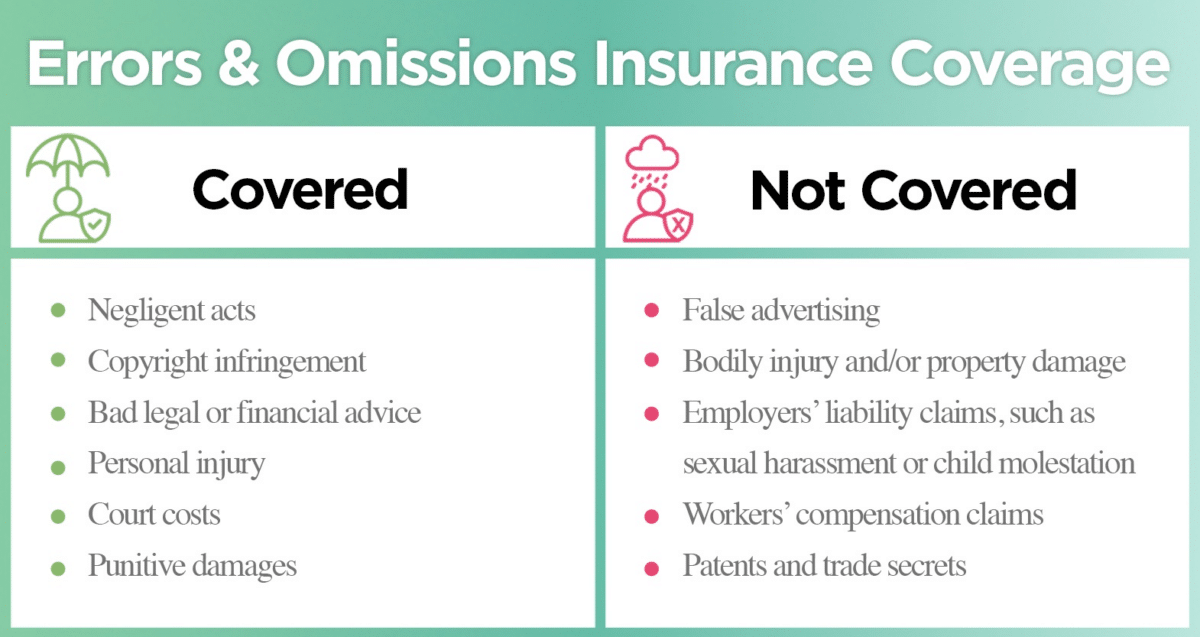
Often called E&O insurance, this coverage is designed for service-based businesses accused of mistakes, negligence, inaccurate guidance, or failure to perform as promised. In practice, many Washington professionals also hear it called professional liability insurance; for most industries, the terms are used interchangeably. The key distinction is with general liability insurance, which usually responds to bodily injury, property damage, or advertising injury, not claims that a client lost money because your advice, service, or deliverable fell short.
Where Professional Mistakes Turn Into Financial Risk
Washington’s service economy makes this coverage especially relevant for firms whose value comes from expertise rather than physical products. If a client believes your professional judgment created a measurable loss, E&O insurance can help with legal defense, settlements, and covered claims, even when the allegation is ultimately unfounded.
The professionals who most often rely on this protection in Washington include the following groups:
- Consultants such as management, marketing, HR, and business strategy advisors whose recommendations influence client decisions.
- Real estate professionals including brokers and agents handling disclosures, transaction details, and client communications.
- Insurance agents and brokers who may be accused of recommending the wrong coverage or failing to place requested policies.
- Technology providers such as software developers, IT consultants, MSPs, and systems integrators delivering technical services tied to business operations.
- Licensed service firms whose work depends on specialized training, documentation accuracy, and contractual performance.
Claims tend to arise from ordinary workday breakdowns rather than dramatic disasters. A consultant may deliver advice based on incomplete analysis. A real estate professional may be accused of misrepresentation or a missed material fact. An insurance agent might face allegations that a policy gap caused a client’s uninsured loss. A tech vendor may miss a launch date, deploy a flawed system, or fail to deliver the functionality promised in a contract.
Common Washington E&O claim scenarios often include:
- Negligence in performing professional duties or failing to meet the expected standard of care.
- Missed deadlines that trigger business interruption, lost revenue, or contract disputes for the client.
- Inaccurate advice that leads a customer to make a costly decision.
- Misrepresentation involving statements, omissions, or unclear service expectations.
- Failure to deliver contracted services in the scope, quality, or timeline originally promised.
Pro Tip: In Washington, even a meritless allegation can become expensive fast. E&O insurance is often as much about paying for defense and preserving business continuity as it is about paying damages.
| Coverage Purpose | Common Claims | Typical Exclusions | Ideal Policyholders |
|---|---|---|---|
| Protects against client allegations of financial loss caused by professional errors, omissions, or failed services. | Negligence, bad advice, missed deadlines, misrepresentation, incomplete work. | Bodily injury, property damage, intentional wrongdoing, fraud, and claims outside policy terms. | Consultants, real estate professionals, insurance agents, tech providers, and licensed service firms. |
This is why E&O coverage matters so much in Washington: when your business sells expertise, your biggest exposure is not always what you break physically, but what a client says your judgment, communication, or performance cost them financially.
Washington State Requirements, Regulations, and Industry Expectations
In Washington State, errors and omissions insurance is rarely a blanket legal requirement for every business, but it often becomes essential the moment licensing rules, client demands, or signed contracts enter the picture. The smart move is to treat E&O not as optional paperwork, but as a credibility tool that helps protect revenue and win work.
For most Washington businesses, the real question is not “Does the state require it for everyone?” but “Who requires it in my line of work?” In practice, expectations usually come from professional licensing boards, government procurement standards, commercial clients, landlords, prime contractors, and association best practices. Some regulated professions may face insurance or financial responsibility expectations tied to licensure, while many consultants, tech vendors, and service firms encounter E&O requirements through contracts rather than statutes. Because rules can change, businesses should verify current obligations directly with the relevant Washington agency, licensing board, contract language, or legal advisor before buying a policy.
Where Rules End and Market Pressure Begins
A practical way to evaluate Washington expectations is to compare regulated-profession requirements with contract-driven insurance demands. Regulated fields may have state-specific standards connected to licensing, registration, or disciplinary oversight. By contrast, contract-based expectations are often broader and can apply even when no statute mandates E&O at all. This is especially common when a business gives advice, designs solutions, handles sensitive data, or provides specialized professional judgment.
| Source of Expectation | How It Usually Works in Washington | What Businesses Should Verify |
|---|---|---|
| State licensing or regulatory boards | Applies to certain professions, sometimes through direct insurance rules or financial responsibility standards | Board rules, license renewal terms, minimum limits, wording requirements |
| Client and vendor contracts | Common in consulting, technology, design, and outsourced professional services | Required limits, retroactive dates, deductibles, proof-of-insurance language |
| Public bids and procurement | Government agencies and large institutions may require certificates before award | Bid specs, indemnity clauses, additional insured requests if applicable |
| Industry associations or market norms | Not always mandatory, but often expected to stay competitive and credible | Membership guidance, client expectations, peer standards |
Before purchasing, Washington businesses should confirm whether their exposure is tied to law, license, or leverage. Law means a state rule. License means a profession-specific board standard. Leverage means a client can simply refuse to hire you unless the policy is in place. That distinction matters because it affects the policy limit, effective date, and endorsements you may need.
In Washington, proof of E&O coverage is frequently requested in the following sectors:
- Management, HR, marketing, and operations consulting engagements
- Technology services, software development, SaaS vendors, and cybersecurity providers
- Architecture, engineering, design, and technical specification work
- Real estate-adjacent advisory services, including property consulting and transaction support
- Financial, tax, bookkeeping, and certain fiduciary or advisory service contracts
- Healthcare-adjacent administration, telehealth support, and specialized professional outsourcing
Pro Tip: In Washington State, contractual insurance requirements often do the heavy lifting. Even when state law does not broadly require E&O coverage, a client, agency, or prime contractor can make it a practical must-have by tying proof of insurance to eligibility, onboarding, or payment.
That is why verification should happen before choosing a policy. Review Washington licensing sources, read every bid package and service agreement carefully, and ask whether the other party requires a certificate, specific limits, prior acts coverage, or policy language tailored to professional services. A policy that looks adequate on paper may still miss the exact requirement that keeps a contract from moving forward.
Coverage Details, Exclusions, and Optional Endorsements
The fine print in an errors and omissions policy is where real protection is either strengthened or quietly narrowed. In Washington State, knowing exactly how coverage works can help a business avoid expensive surprises when a claim finally appears.
Most E&O policies are built to protect against financial harm caused by professional mistakes, missed deadlines, negligent advice, or failure to deliver promised services. Still, the value of that protection depends on several moving parts: when the claim is made, whether the act happened after the retroactive date, how defense costs are handled, what deductible applies, and how quickly the insured reports a problem to the carrier.
What the Policy Language Really Controls
Before comparing endorsements, it helps to understand the standard framework. A typical Washington E&O policy is claims-made, meaning the claim usually must be made and reported while the policy is active. The retroactive date matters just as much because it often limits coverage to services performed on or after that date. If a business changes insurers and loses prior acts protection, older work may suddenly fall into a gap.
Core policy mechanics often include the following:
- Defense costs: Some policies pay legal defense inside the limit, which can reduce the amount left for settlement or judgment.
- Deductible or retention: The insured may need to pay a fixed amount before coverage responds, and some deductibles apply to defense as well as damages.
- Limits of liability: Policies commonly have both per-claim and aggregate limits, which can matter if several clients allege related errors.
- Reporting obligations: Delayed notice can jeopardize coverage, especially when a complaint, demand letter, or circumstance should have been reported earlier.
Exclusions are equally important because they define where E&O stops. Most policies exclude intentional misconduct, fraud, bodily injury, and property damage, since those issues are usually handled by other forms of insurance or not insured at all. Many also exclude cyber events such as data breaches, ransomware, or privacy failures unless a cyber endorsement or separate policy is added. Another major limitation is the prior known acts exclusion: if the business knew about a likely problem before the policy began, the insurer may refuse the claim.
Optional endorsements can make a standard policy far more practical for modern service firms. Cyber liability endorsements may help when client data, networks, or digital workflows create exposure beyond pure professional advice. Subpoena assistance can offset legal costs when the business is dragged into a matter even before a formal lawsuit. Regulatory defense may help with certain investigations or administrative actions, while contractor-related extensions can be useful when subcontractors, outsourced specialists, or 1099 partners are part of service delivery. Prior acts coverage is often the endorsement that preserves continuity after switching carriers or launching a new policy.
Pro Tip: Ask whether defense costs are inside or outside the policy limit and whether notice of a “potential claim” is allowed. Those two details can heavily affect real-world protection.
| Coverage Feature | What It Helps Protect | Common Limitation | When an Endorsement May Be Useful |
|---|---|---|---|
| Claims-made structure | Claims reported during the active policy period | Late reporting can defeat coverage | Extended reporting period after closure, sale, or retirement |
| Retroactive date / prior acts | Earlier professional services after the covered date | No protection for work before that date | When switching insurers or replacing a lapse |
| Defense costs | Attorney fees, investigation, and claim response | Often erodes the policy limit | When large legal spend is a realistic risk |
| Cyber liability endorsement | Data breach, privacy, and network-related loss | Usually excluded from basic E&O | If client records, payment data, or cloud systems are involved |
| Regulatory / subpoena coverage | Legal expense tied to investigations or document demands | May apply only to narrow proceedings | For licensed professionals or heavily supervised industries |
Cost Factors and Pricing in Washington State
In Washington State, E&O pricing is never random; it reflects how much risk your work creates, how often mistakes could trigger losses, and how expensive a claim might become. The right policy can feel surprisingly affordable for lean firms, while complex practices usually pay more for broader protection.
Insurers in Washington look at both your business profile and the way you manage professional exposure. A solo consultant with clean contracts and tight internal controls may land near the low end, while a growing design, tech, or engineering firm with larger projects, more staff, and higher requested limits will usually see noticeably higher premiums. That is why two firms with similar revenue can still receive very different offers.
What Moves the Price Needle Fastest
The biggest premium drivers are tied to claim severity, contract risk, and operational complexity. Washington carriers often weigh not just what you do, but who you do it for, how large your assignments are, and whether your agreements expand liability beyond normal professional standards.
Common pricing factors include:
- Profession and service type: Low-risk advisory work usually costs less than design, technology, engineering, or specialized technical services.
- Annual revenue: Higher revenue often signals more clients, more projects, and more opportunities for disputes or alleged errors.
- Claim history: Prior claims, even small ones, can push rates upward or limit carrier appetite.
- Employee count: More licensed staff, subcontractors, or client-facing employees generally increase exposure.
- Project size and client profile: Large contracts, public-sector work, or high-value deliverables can raise premium costs.
- Contract terms: Indemnity clauses, guarantees, penalties, or broad assumed liability often make underwriters cautious.
- Requested limits and deductible: Higher limits cost more, while a higher deductible can sometimes reduce premium.
- Location and service footprint: A Washington firm serving only local clients may price differently from one handling multi-state or national work.
- Risk controls: Written procedures, peer review, documentation standards, cybersecurity, and engagement letters can help pricing.
- Policy customization: Added endorsements, prior acts coverage, cyber tie-ins, or subcontractor extensions may increase cost.
For small firms, pricing is often shaped by simplicity: fewer employees, narrower service scope, and smaller contract values can keep premiums in check. Larger professional practices usually pay more because insurers see broader exposure, more moving parts, and a higher chance that one mistake affects multiple clients or projects at once. Customization matters too: firms that need tailored endorsements or elevated limits for contract compliance should expect premiums above baseline market ranges.
Pro Tip: If you want sharper pricing, tighten contracts before shopping. Clear scopes of work, capped liability language, and documented quality-control steps can make your submission look far stronger to Washington underwriters.
| Business Type | Risk Level | Estimated Premium Range | Key Pricing Factor |
|---|---|---|---|
| Solo consultant, bookkeeper, marketing advisor | Low-risk | $500-$1,500/year | Revenue and clean claims history |
| Small CPA, HR, insurance, or business advisory firm | Moderate-risk | $1,200-$3,500/year | Client volume and requested limits |
| IT consultant, web developer, design firm | Moderate to elevated | $1,500-$5,000/year | Project scope and contract obligations |
| Engineering, architecture, specialty technical practice | Specialized high-risk | $4,000-$15,000+/year | Large projects, higher severity potential |
How to Choose the Right Policy and Compare Providers
:max_bytes(150000):strip_icc()/EO-Final-35aff6b5f50644aabd242e60da643e80.jpg "Mastering Errors and Omissions Insurance Strategies - OCMI Workers Comp")
The best E&O policy is not the cheapest one on the screen; it is the one that still works when a demanding client, missed deadline, or disputed recommendation turns into a legal problem. In Washington State, smart buyers compare wording, support, and fit before they compare price.
Start by treating the purchase like a risk audit. Map your actual services, the size of your contracts, the industries you serve, and how long a claim could take to surface. Then compare each policy against that reality, because a beautiful quote can still hide gaps in limits, defense handling, prior-acts protection, or exclusions that matter to your day-to-day work.
Policy Fit Audit for Real-World Service Risks
Use this sequence to avoid buying coverage that looks broad but fails under pressure. First, test the coverage limit against your largest project, likely legal costs, and any contract-required minimums. Next, check the deductible: a lower premium is less attractive if the retention would strain cash flow during a dispute. Then confirm the retroactive date and whether prior acts are covered, especially if you are switching carriers or reopening work from earlier years.
After that, read the exclusions with discipline. Focus on carve-outs for contractual liability, cyber-related incidents, intellectual property, bodily injury/property damage overlap, subcontractors, and services you occasionally provide outside your core scope. Also verify how defense arrangements work: is defense inside or outside limits, does the insurer appoint counsel, and do you need consent before settlement? Finally, research insurer reputation and claims support by looking at financial strength, complaint history, responsiveness, and whether they regularly handle professional liability claims for Washington-based firms in your field.
Provider type matters as much as policy form. The right source depends on how specialized, contract-heavy, or unusual your professional exposure is.
| Provider Type | Best Fit | Main Advantage | Watch Out For |
|---|---|---|---|
| Direct carriers | Simple operations with standard services | Fast quotes and streamlined buying | Less flexibility for unusual exposures |
| Brokers | Businesses wanting multiple quotes and guidance | Market access and side-by-side comparisons | Quality varies by broker expertise |
| Specialty insurers | High-risk, niche, or contract-intensive professions | Sharper wording for industry-specific claims | Premiums may be higher |
Before you bind coverage, review documents the way a skeptical client would. Ask for a sample policy, specimen endorsements, and a certificate example. Compare the insuring agreement and definitions to your proposals, website language, and service menu. Then read key client contracts to spot insurance requirements for limits, additional insured requests, notice obligations, venue clauses, and indemnity language that may create obligations broader than the policy intends to cover.
Pro tip: If your policy describes one service but your contracts, marketing, or invoices suggest another, the mismatch can become the opening an insurer uses to challenge coverage. Policy wording should mirror the work you actually perform, not the work you wish you only performed.
Use this checklist when comparing final options so you are measuring substance, not just headline premium.
- Confirm limits per claim and aggregate against client contract requirements.
- Compare deductible levels with your cash reserves and risk tolerance.
- Verify retroactive date, prior-acts coverage, and continuity if switching carriers.
- Read exclusions for services, subcontractors, cyber events, and contract assumptions.
- Check whether defense costs reduce limits and who controls counsel and settlement.
- Review certificate language and whether the provider can satisfy client paperwork demands quickly.
- Assess insurer financial strength, claims reputation, and Washington-relevant experience.
- Ask whether endorsements can be tailored to your exact professional scope.
Claims Process, Risk Reduction, and Best Practices for Washington Businesses
When a client complaint lands in your inbox, speed matters—but so does restraint. Washington service businesses protect themselves best when they respond with a calm process, clean records, and zero improvisation.
An errors-and-omissions issue often starts small: a frustrated email, a demand letter, or a notice that your work allegedly caused financial harm. The biggest mistake is treating it like a routine customer-service problem. Instead, preserve documents immediately, notify the right people fast, and communicate with discipline. Many policies require prompt notice, so delays, informal admissions, or unauthorized refunds can complicate defense and coverage.
Operational Habits That Quietly Prevent Big Problems
If your business delivers advice, design, consulting, marketing, technology, accounting support, or other professional services, your strongest defense starts long before a claim. Use contracts that define scope, assumptions, deadlines, deliverables, client duties, approval points, and dispute procedures. In Washington, that clarity helps prevent projects from drifting into arguments about what was promised versus what was actually purchased. Add written change-order procedures so extra work, revised deadlines, and new client requests are approved before the work begins—not after the invoice is challenged.
Recordkeeping is equally powerful. Keep signed agreements, email approvals, meeting notes, file versions, invoices, training logs, and quality-review checklists in one searchable system with consistent retention rules. Strong internal review workflows also reduce exposure: a second-person review before reports go out, pre-launch checklists for agencies and developers, deadline calendars with escalation triggers, and documented client sign-off before implementation. Staff training should cover complaint escalation, documentation standards, privacy practices, and one simple rule: never admit fault or negotiate liability casually.
Use this response sequence when a problem first appears:
- Pause work that could worsen the issue and preserve all related emails, drafts, contracts, texts, invoices, and notes.
- Log the date, sender, allegation, project name, and any stated damages in an internal incident record.
- Notify leadership, legal counsel, or risk personnel immediately, then review your policy’s notice requirements.
- Report the matter to your insurer or broker promptly if the complaint suggests negligence, financial loss, or a demand for payment.
- Respond professionally to the client, but keep statements factual, brief, and non-admissive while the matter is reviewed.
- Stop side deals, refunds, rework promises, or settlement discussions unless approved by counsel or the insurer.
- Create a timeline of events and gather the final deliverables, approvals, change requests, and review history.
Pro Tip: The safest early response is often, “We take this seriously, are reviewing the matter, and will respond through the appropriate channel.” That protects relationships without creating harmful admissions.
Practical controls can be simple and highly effective for Washington businesses. A consultant can require kickoff forms that capture business goals and exclusions. A marketing firm can use campaign approval checkpoints before launch. An IT provider can require ticket-based authorization before making system changes. A bookkeeper can lock month-end review checklists before financial reports are sent. These habits do not just reduce mistakes—they create the documentation needed to defend your work when expectations later shift.
| Risk Area | Preventive Action | Document to Keep | Benefit to the Business |
|---|---|---|---|
| Scope creep | Use written change orders for added work | Signed scope and amendments | Reduces unpaid work and promise disputes |
| Client approval disputes | Set milestone sign-offs before launch or delivery | Approval emails and version history | Shows what the client reviewed and accepted |
| Service errors | Require peer review or checklist completion | QA checklist and reviewer notes | Catches issues early and proves process discipline |
| Complaint escalation | Train staff on notice and communication rules | Training logs and incident reports | Supports faster reporting and cleaner claim handling |
Closure
The strongest Washington businesses do not wait for a complaint letter to start thinking about protection. They review contracts carefully, define scope in writing, document change orders, train staff, preserve records, and carry coverage built for their actual risk profile. When a claim does appear, fast reporting, disciplined communication, and complete documentation can make a major difference in the outcome.
If your business earns trust through advice, analysis, design, placement, or professional judgment, the right errors and omissions insurance can be more than a policy it can be a confidence advantage. Compare providers closely, examine exclusions, confirm whether cyber or regulatory extensions are needed, and choose coverage that helps your Washington operation stay credible, competitive, and ready for growth.
Common Queries
What does errors and omissions insurance cover in Washington State?
It generally covers claims that your professional services caused a client financial loss, such as negligence, inaccurate advice, missed deadlines, or failure to deliver promised work.
Is errors and omissions insurance required by Washington law?
Usually not for every profession statewide, but some licensed fields, contracts, and clients may require proof of coverage before work begins.
Is errors and omissions insurance the same as general liability?
No. General liability usually covers bodily injury and property damage, while errors and omissions insurance addresses professional mistakes and service-related financial harm.
Who most often needs this coverage in Washington?
Consultants, insurance agents, real estate professionals, technology firms, designers, and other licensed or advisory businesses commonly rely on it.
How are premiums priced in Washington State?
Pricing often depends on your profession, revenue, claim history, employee count, project size, contract terms, requested limits, and optional endorsements.
What are common exclusions in an errors and omissions policy?
Typical exclusions include intentional misconduct, bodily injury, property damage, known prior acts, and some cyber incidents unless added by endorsement.
What should I do if a client accuses my business of a professional error?
Save documents, avoid admitting fault, notify your insurer quickly, follow reporting requirements, and keep communications clear, consistent, and professional.